
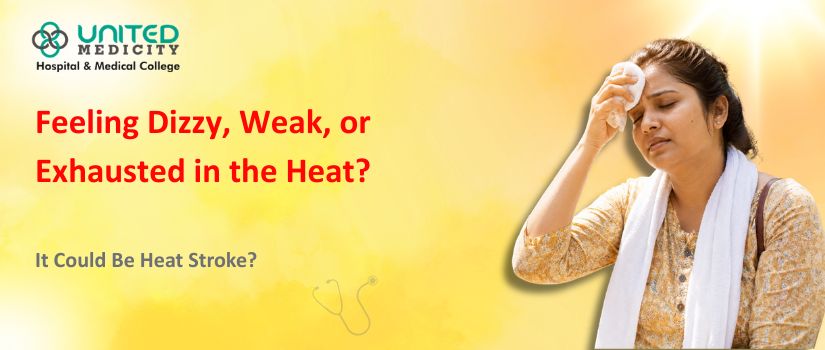
Feeling Dizzy, Weak, or Exhausted in the Heat? It Could Be Heat Stroke
Summer brings longer days, rising temperatures, and unfortunately, a sharp increase in heat-related illnesses.
By United Medicity Super Speciality Hospital, Prayagraj
Summer brings longer days, rising temperatures, and unfortunately, a sharp increase in heat-related illnesses. Many people often ignore symptoms like dizziness, weakness, tiredness, excessive sweating, or headaches, assuming it is just “summer fatigue” or dehydration. However, in some cases, these may be early warning signs of a serious and potentially life-threatening condition called Heat Stroke.
Heat stroke is not just a seasonal discomfort; it is a medical emergency that requires immediate attention.
What Exactly Is Heat Stroke?
Our body has a natural cooling system that helps regulate temperature through sweating. But when we are exposed to extreme heat for prolonged periods, especially without enough fluids or rest, the body may lose its ability to cool itself.
As body temperature rises rapidly sometimes above 104°F (40°C), vital organs such as the brain, heart, kidneys, and muscles can begin to get affected. If not treated on time, heat stroke can lead to severe complications and may even become life-threatening.
Early Symptoms People Commonly Ignore
Heat stroke often begins gradually. The problem is that many people ignore the initial symptoms until the condition worsens.
Watch out for these warning signs:
- Persistent weakness or unusual fatigue
- Dizziness or light-headedness
- Severe headache
- Excessive sweating followed by dry, hot skin
- Nausea or vomiting
- Muscle cramps
- Rapid heartbeat
- High body temperature
- Confusion, irritability, or restlessness
- Difficulty breathing
- Fainting or loss of consciousness in severe cases
If these symptoms appear after prolonged exposure to heat or sunlight, they should never be ignored.
Who Is More Vulnerable to Heat Stroke?
Although heat stroke can affect anyone, some individuals are at higher risk, including:
- Elderly individuals
- Children
- Outdoor workers and traffic personnel
- Athletes or people exercising in the sun
- Patients with diabetes, high blood pressure, or heart disease
- Individuals who drink less water during summer
- People exposed to direct sunlight for long hours
What Should You Do Immediately?
If someone around you is showing signs of heat stroke, quick action can make a major difference.
Immediate First Aid Measures:
- Move the person to a cool or shaded place
- Offer water or ORS if the person is conscious
- Remove or loosen tight clothing
- Apply cold cloths or ice packs to the body
- Use fans or cool air for faster cooling
- Seek medical attention immediately if symptoms continue
Do not wait for symptoms to become severe. Delayed treatment can be dangerous.
Simple Ways to Prevent Heat Stroke
Prevention is always better than emergency treatment, especially during peak summer months.
Follow These Summer Safety Tips:
- Drink plenty of water throughout the day
- Avoid going out in direct sunlight during afternoon hours
- Wear loose, light-coloured cotton clothes
- Avoid excessive physical activity in extreme heat
- Include fruits, fluids, and electrolytes in your diet
- Never leave children or elderly people inside parked vehicles
- Take regular breaks if working outdoors
Even mild dehydration can affect the body significantly during extreme heat.
When Should You Visit a doctor?
If symptoms such as dizziness, weakness, vomiting, confusion, or high fever-like temperature continue despite rest and hydration, immediate medical evaluation is necessary.
Early diagnosis and timely treatment can prevent serious complications related to heat stroke and dehydration.
At United Medicity, the Department of General Medicine provides expert care for heat-related illnesses, dehydration, weakness, seasonal infections, and emergency summer health conditions.
Stay Hydrated. Stay Alert. Stay Safe.
Your body often gives warning signs before a serious health emergency occurs. Do not ignore persistent weakness, dizziness, or exhaustion during summer.
Taking timely precautions and seeking medical help early can protect you and your loved ones from the dangers of heat stroke.
Department of General Medicine
United Medicity Hospital & Medical College
Prayagraj
💙 At United Medicity Super Speciality Hospital, Prayagraj, we believe early care and timely treatment can save lives during extreme summer conditions.
#WorldStrokeDay #StrokeTreatment #StrokeRecovery #StrokeSurgery #DecompressiveCraniotomy #MechanicalThrombectomy #StrokeCare #UnitedMedicity #SuperSpecialityHospitalPrayagraj #NeurologyCare #BrainHealth #TimeIsBrain #StrokeAwareness #StrokeKaIlaaj
Comments (0)
No comments yet. Be the first to comment!